How to store your CBD flowers?

A CBD flower is a natural, living product: stored badly, it loses its aromas, dries out or takes on moisture, and its cannabinoids and terpenes gradually degrade. The good news: you need neither expensive equipment nor complicated techniques. With a few simple reflexes — an airtight glass jar, a cool dark place, controlled humidity — you preserve the quality of your flowers for months. Here is the complete guide.
The 4 enemies of your CBD flowers
Four physical factors degrade a CBD flower over time: light, air, humidity and heat. Light, and UV rays in particular, gradually alters cannabinoids and dulls aromas: this is precisely why sensitive products are traditionally kept in opaque containers or in the dark. The oxygen in the air causes slow oxidation that costs freshness and aromatic intensity, hence the value of an airtight container opened as rarely as possible. Humidity works both ways: too much encourages mould to appear, while air that is too dry makes the flower crumbly and harsh. Finally, heat accelerates all these reactions and dries out the plant material. Successful storage simply consists of neutralising these four enemies at the same time.
- Light (especially UV): it degrades cannabinoids and terpenes. Keep your flowers sheltered, in a cupboard or an opaque container.
- Air: oxidation costs aromas and freshness. Choose an airtight container, opened only when necessary.
- Humidity: too much encourages mould; too little dries out the flower and breaks its aromas.
- Heat: it dries out and accelerates degradation. Aim for a cool, stable spot, away from radiators and windows.
The ideal method
The reference method for storing CBD flowers fits in one sentence: an airtight glass jar, kept in a cool, dry and dark place, at a stable temperature. Glass is neutral: it holds no static electricity, transmits no taste and seals genuinely tight, unlike plastic bags which, over time, catch the pollen, let air through and alter the aromas. A kitchen cupboard away from the oven, a drawer or a dry cellar are perfect: the goal is a cool, constant temperature, ideally below 21°C, without abrupt swings. Avoid the fridge: its high humidity and the thermal shocks at every opening make water condense on the flower. Fill your jar to about three quarters, to limit the volume of air without crushing the buds.
What humidity level to aim for? The 55-62% benchmark
The most precise criterion for optimal storage is the relative humidity inside the container. The benchmark commonly used by hemp professionals sits between 55 and 62% relative humidity: within this range, the flower stays supple and aromatic without reaching the moisture level where mould can develop. It is on this very range that the two-way humidity control packs (often 58% or 62%) sold for herb storage are calibrated: placed in the jar, they absorb or release moisture to maintain a constant level. This small, inexpensive accessory is the best ally of long storage. Conversely, a flower stored in very dry air becomes brittle and quickly loses its aromatic profile, while above 65% relative humidity the risk of mould rises sharply.
The right accessories
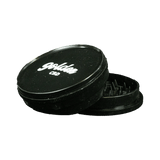
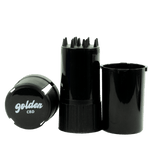
A few accessories help keep your flowers at their best: an airtight storage box (glass or gasketed metal), a humidity control pack to slip into the jar, and a grinder to grind only the amount you need at the time — a whole flower exposes far less surface to the air and therefore keeps much better than a ground one. If you store several varieties, use one jar per variety: the aromatic profiles do not mix and you avoid needlessly opening your whole stash.
How long do they keep?
Properly stored — airtight jar, darkness, coolness, controlled humidity — a CBD flower keeps the essence of its aromatic qualities for six months to a year. Beyond that, it generally remains usable if no mould has appeared, but it gradually loses intensity: the highly volatile terpenes evaporate first, then the cannabinoids slowly transform under the effect of air and light. Three signs indicate an aged flower: it crumbles to dust instead of breaking apart, its smell has faded or turned, its colour has gone dull brown. The simplest reflex remains buying quantities suited to your actual pace of consumption — our packs and varied formats are designed for exactly that.
Mistakes to avoid
- Keeping the original plastic bag for weeks: handy for transport, bad over time.
- The fridge or freezer: condensation, humidity and brittle trichomes as a result.
- The windowsill or the top of a radiator: direct light and heat, the worst combo.
- Grinding your whole stash in advance: ground flower oxidises much faster.
- Opening the jar ten times a day: every opening renews the air and releases aromas.
FAQ — Storing CBD
Can you put CBD flowers in the fridge or freezer?
It is not recommended: high humidity, condensation and temperature swings damage the flowers, and freezing makes the trichomes brittle. A cool, dry, dark place at a stable room temperature is preferable.
What is the ideal humidity level?
Aim for a relative humidity between 55 and 62% in the container. A two-way control pack (58% or 62%) maintains this level automatically.
How can you tell if a CBD flower is still good?
A flower that is too dry and crumbles to dust, has lost its smell or whose colour has dulled has aged. If there is any trace of mould (white fuzz, musty smell), do not consume it and throw it away.
Is glass really better than plastic?
Yes, over time: airtight glass preserves aromas better, transmits no taste and avoids the static electricity of plastic, which holds on to part of the pollen.
Should each variety be stored separately?
That is the ideal: one jar per variety preserves each one's aromatic profile and limits unnecessary openings.
These tips are provided for information, to preserve the quality of a well-being and relaxation product. Product reserved for adults.
Regulatory references
To go further on the legal framework for CBD in Europe: Regulation (EU) 2015/2283 on novel foods governs CBD as a food ingredient; the French order of 30 December 2021 sets the THC threshold at 0.3% in France for hemp-derived products; and the CJEU “Kanavape” ruling C-663/18 of 19 November 2020 established the free movement of CBD legally produced in the European Union. This general information does not constitute legal advice.